
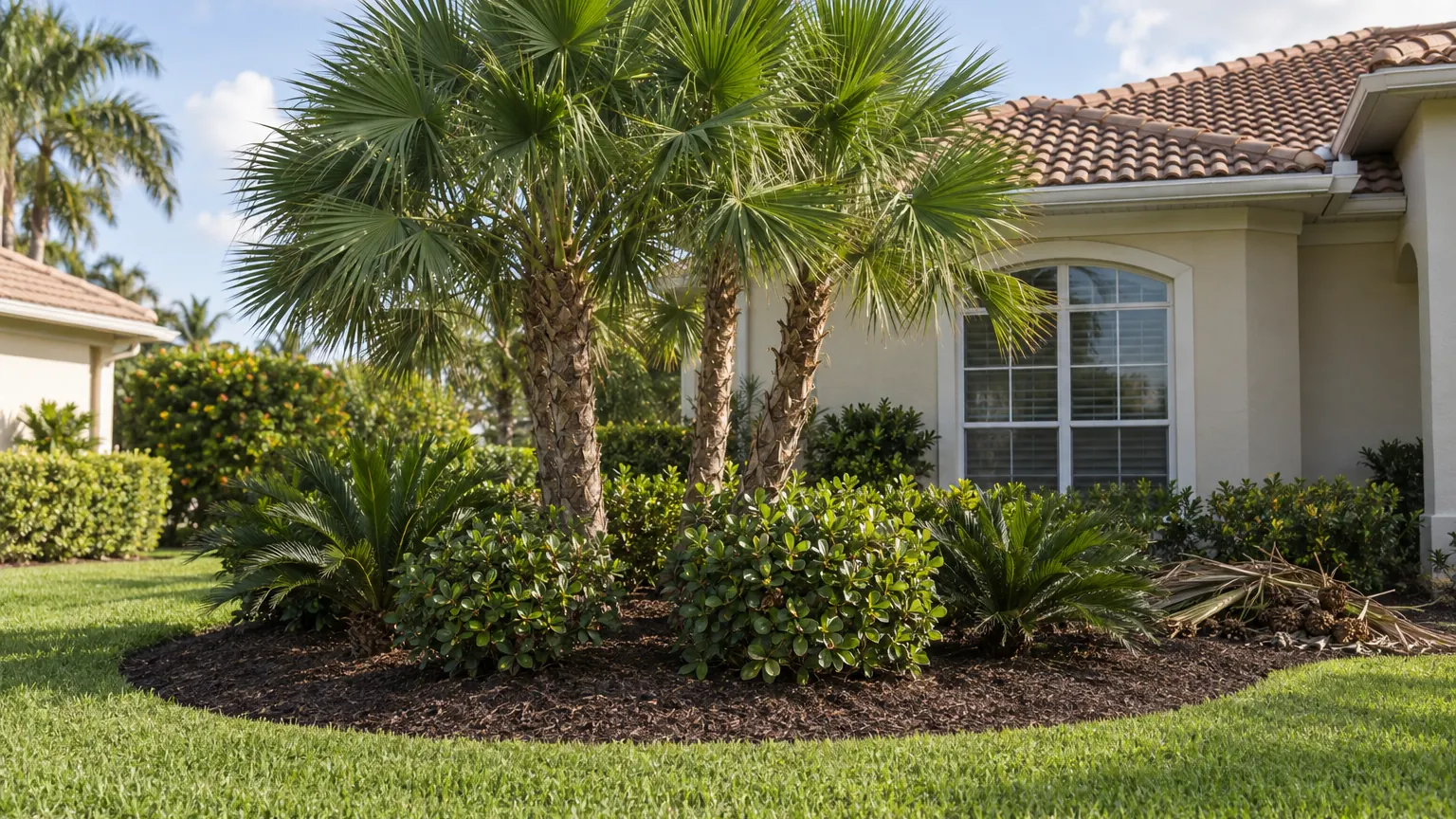
What Does a Fall Cleanup Include in Southwest Florida?
A fall cleanup in Southwest Florida is less about raking and more about resetting the property after summer storms and heavy growth. It usually means clearing debris and dead fronds, cutting back overgrown beds, weeding, refreshing mulch, and tidying turf edges. The best window is typically October into November, once the worst of the rainy season has passed.
How is a Florida fall cleanup different from one up north?
Up north, fall cleanup is about leaves: a short, heavy drop followed by winter. Here, winters are mild, so the yard does not shut down all at once. Some turf, shrubs, and deciduous trees slow down or go partly dormant in cooler weather, depending on the species, but many beds, shrubs, and palms keep growing, and the summer rainy season leaves behind plenty of overgrowth, weeds, and storm litter.
So the goal changes. You are not putting the yard to bed. You are cleaning up what summer left, setting the landscape up for the drier months, and getting ahead of the winter and spring growth push.
When is the best time for a fall cleanup in Sarasota and Manatee counties?
For most properties, October and November work well. By then the daily downpours have eased, the ground is easier to work on, and crews can get into beds without fighting standing water.
A few timing points worth knowing:
- Hurricane season runs through November 30. If a storm is in the forecast, hold off on trimming and mulching. Fresh debris and loose mulch are the first things to blow around.
- Do the heavy cutting after the last real threat, not before. Cleaning up twice is wasted effort, so waiting a couple of weeks can be the better call.
- Leaf drop peaks later than people expect. Many local hardwoods shed in late winter and spring rather than in fall, so a single October visit won’t catch all of it.
What tasks are part of a Florida fall cleanup?
Every property is different, but a thorough cleanup generally covers these areas.
Debris and leaf removal
Fallen branches, palm fronds, seed pods, acorns, and leaf litter come out of beds, turf, and along fences and walls. Debris left in beds traps moisture against plant bases and gives pests a place to hide.
Bed cleanup and weed control
Summer weeds go to seed quickly in Florida. Pulling or treating them in fall, before they drop seed, makes the rest of the year easier. Overgrown shrubs and groundcovers get cut back to shape, and dead or declining plants are flagged for replacement.
Turf tidying
Mowing and edging keep going through the year, but fall is a good time to re-cut edges along walks, drives, and beds. Those lines blur fast in warm, wet months.
Drains and low spots
Leaves and sand collect in catch basins, swales, and gutter outlets. Clearing them after the rainy season means water has somewhere to go when the next big rain comes.
Irrigation check
As rainfall drops off, the irrigation system takes over. Running each zone and looking for broken heads, clogged nozzles, and overspray is easier now than in the middle of dry season. Schedules also need adjusting because plants need less water as temperatures cool.
How do you handle storm debris and palm fronds after the summer storms?
Start with safety. Hanging limbs, cracked trunks, and leaning trees are not a do-it-yourself job, especially near roofs, pool cages, or power lines. Those need a trained crew.
For the routine debris, the approach is simple:
- Walk the property and mark anything that looks structurally damaged.
- Remove fallen limbs and fronds from turf and beds first, so mowing and bed work can proceed.
- Prune dead, broken, and hanging material from trees and palms.
- Haul everything off or bag it for pickup. Piles left in corners become rodent shelter.
With palms, more trimming is not better. Removing only dead or damaged fronds and spent seed stalks is the usual standard. Cutting green fronds high up the crown (the so-called hurricane cut) does not protect the tree and can weaken it. Hardwoods such as live oaks benefit from selective pruning of dead wood and crossing branches rather than heavy cuts.
Hardwood and palm tree care is part of our landscape maintenance work, and it can be combined with a cleanup when a property needs both.
Should you refresh mulch and beds in the fall?
Usually yes, with a caveat about timing. Mulch breaks down quickly in Florida’s heat and rain, and by October most beds are thin or patchy. A fresh layer of roughly two to three inches helps hold soil moisture through the dry season and suppresses weeds.
Keep mulch pulled back from trunks and palm bases. Piling it against the stem holds moisture on the bark and invites rot and pests, so skip the volcano shapes around trees. Mulch after weeding and debris removal, since mulching over weeds only buries the problem for a few weeks, and wait if a storm is on the way.
Fall is also a good point to think about seasonal color. Beds that were cut back can be refilled with annuals that do well in cooler months, and a clean, freshly mulched bed makes the plantings look better.
One-time cleanup or ongoing maintenance?
A one-time cleanup makes sense if the property is generally in good shape, you just need a reset after summer, or you are getting a home ready for guests or for sale. It is a clean slate for the season.
Ongoing maintenance makes more sense if you find yourself calling for cleanups over and over. Our approach is maintenance-first: steady, proactive care helps keep debris, weeds, and irrigation problems small, so a fall cleanup can become a lighter pass instead of a major project. This matters most for HOAs and commercial properties, where consistency is part of how the place looks and functions.
You can see what we offer on our fall cleanups and leaf removal service page.
A simple checklist before you start
- Check the forecast for tropical activity before any heavy trimming.
- Walk the property and note hazards, bare spots, and failing plants.
- Clear debris and weed beds before mulching.
- Clean out drains, swales, and basins.
- Run the irrigation zones and adjust the schedule for cooler weather.
- Mulch last, and keep it off trunks.
If you would rather have a crew handle it, or you are not sure what your property needs, you can reach out through our contact page and we will talk it through with you.
Frequently asked questions
Do Florida yards need leaf removal?
Yes, though not in one big autumn drop. Palms, oaks, and other trees shed debris throughout the year, and it collects in beds, drains, and along walls. Regular clearing keeps beds healthy and drains working.
When do live oaks drop their leaves in Florida?
Live oaks are semi-evergreen, so they shed most of their old leaves in late winter and spring as new growth pushes out. You will still see some litter in fall, plus acorns and small twigs, so one fall visit will not catch everything.
Is fall a good time to trim palms in Florida?
It can be, once hurricane season is nearly over. Stick to removing dead or damaged fronds and spent seed stalks. Avoid cutting healthy green fronds high on the crown, since that stresses the palm and does not make it more wind resistant.
Should I mulch in the fall in Florida?
Usually yes. Mulch breaks down fast in heat and rain, so beds are often thin by October. Weed first, add a layer of two to three inches, and keep it away from trunks and palm bases.
How often should I schedule a yard cleanup in Florida?
Many properties do well with a fall cleanup and a spring cleanup, plus regular mowing and bed care in between. Larger or tree-heavy properties, and HOA or commercial sites, often do better with ongoing maintenance so debris never builds up.
